Amazon is very competitive, but you can still run a successful business if you get your strategy right.
That includes choosing the right product, marketing it effectively, and creating optimized product listings. But another important way to give your sales and profits a boost is to use an Amazon repricing tool.
Here, we look at seven of the most important benefits of using automated repricing software for your Amazon business.
TL;DR
- Amazon repricing tools are an effective way to boost sales and profits.
- There are seven key benefits of using one of these tools.
- These include freeing up time, saving on labor costs, increasing accuracy, and more.
- There are a few factors to consider when choosing a repricer tool, including speed, rules, and price.
Quick Overview of Repricing
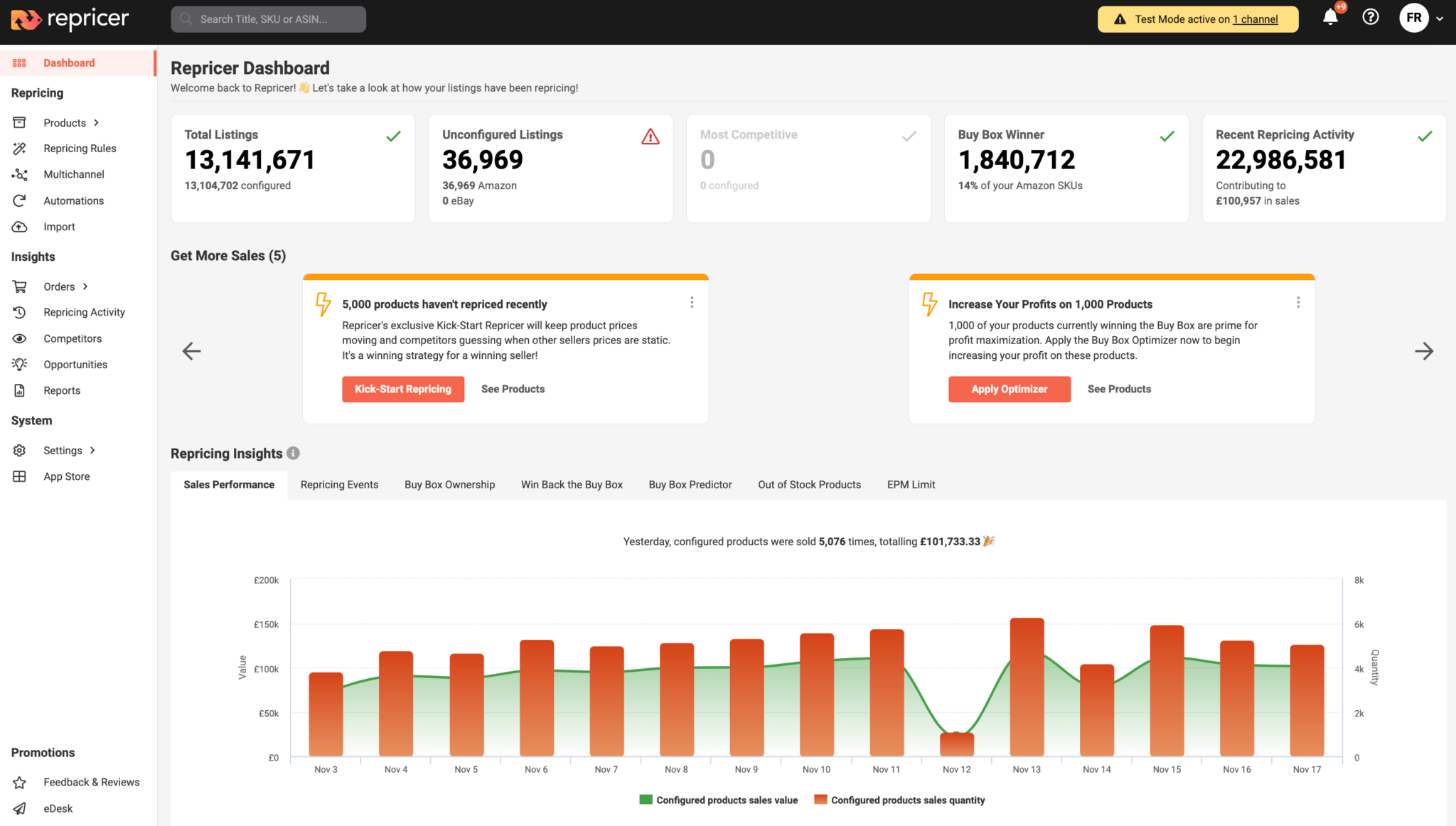
Repricing is simply the process of changing an Amazon product listing price.
You’re probably aware of the fact that prices change on the Amazon marketplace all the time. In fact, a single product could change multiple times daily.
Prices change based on what the competition is doing, the product that currently has the Buy Box, and other factors.
In most listings, multiple Amazon sellers compete for the sale. In general, the more expensive products have less chance of winning the Buy Box and getting the sale, although this depends on several factors.
But prices don’t just go down, and you may want to increase your price when a competitor runs out of stock to boost profits.
And while you can change the price of your product listings manually, this isn’t a realistic option for most sellers on Amazon.
Related: The Ultimate Guide to Repricing on Amazon
7 Benefits Of Using An Amazon Repricing Tool
Here, we’ve shared the seven most important benefits of using repricing software for products on Amazon.
1. React Faster
Using a repricer ensures you can react to your competitors’ own repricing efforts fast.
Having competitive pricing is essential. But when a competitor drops the price of their listing, you’d have to first spot this, then manually change the price, both of which take time.
A repricer does all the work for you. It constantly monitors your competitors, so as soon as one of your competitors drops their price, it’s already onto it.
It reacts based on the rules you have set. For example, it won’t go below the minimum price you’ve established, and it may go down low enough to undercut the competition.
It all happens fast, without you having to think about it. So your competition’s advantage is reduced, and you can get more sales.
2. Free Up Time to Focus on Other Areas
Running an Amazon business takes up a lot of time for most sellers. There’s a lot to do, including marketing, listing optimization, sourcing inventory, managing inventory, and more.
Repricing isn’t one of the tasks you want to be spending time on.
To do repricing effectively, you’d have to spend hours checking other listings, finding out what the competition is up to, and making decisions about how much to reprice.
Because this task can be automated, you can essentially set it and forget it. This frees up your time so you can focus on all the other essential tasks that aren’t so easy to automate.
Automation is the key to success when you run a busy Amazon business. Don’t neglect the other areas of your business by spending time on tasks that can be done more effectively via automation.
3. Save Money on Labor
Whether you’re running a one-person business, or you have a team, you’ll probably need to spend money on labor at some point.
Many Amazon business owners hire Amazon virtual assistants (VAs) to take care of various tasks so they can focus on the high-value tasks and increase productivity and profits.
A repricer is essentially an extra team member that doesn’t rest or take time off. It focuses on one area of your business and prevents you from having to spend money on hiring someone else.
When you do spend money on someone to help you with your business, don’t waste it. Make sure you’re investing in a professional who can take on the essential tasks that you either don’t have the skills for or would rather outsource so you can focus on other areas.
4. Increase Accuracy
Humans make mistakes. It’s a fact of life. There are some things that machines simply do better than us, as many of us are realizing with the growth of AI technology.
Repricing is one of those areas.
No matter how good you may be at repricing, a repricer will always be more accurate. As long as you set up your rules carefully at the start, you can leave the work in its capable hands and reduce the margin for error, giving you more peace of mind.
5. Win the Buy Box More Frequently
One of the major benefits of repricing is that it’ll help you win the Buy Box. While price isn’t the only factor in winning the Buy Box, it’s a major one.
As long as you’ve optimized other areas of your business, you can win the Buy Box more frequently by competing on price.
When using an Amazon repricer, you can make this one of your goals. Your repricer will react to price changes accordingly, helping you to get that prized position.
As a result, the tool can help you make more sales, and it will also help you keep the Buy Box when you’re in it.
6. Choose Better Products
A repricer can be a valuable tool at the start of the process when you’re choosing a new product to sell.
You’ll have many decisions to make when choosing a product, and a repricer won’t make them for you. But a repricing tool like Repricer can at least help you by informing you of its chances to win the Buy Box.
It does this with the Amazon Buy Box Predictor, which uses data to compare similar products and suggests whether a product has a good chance of achieving that coveted spot or not.
Because winning the Buy Box is such an important consideration, this could help you to choose a better product before you spend all that time and money on setting it up and promoting it.
7. Maximize Sales While You Have the Buy Box
Another big perk of an Amazon repricer is that it can help you to get more sales once you’re in the Buy Box. Not all repricers do this, but those that can (including Repricer!) should make a big difference to your bottom line.
Once you have the Buy Box, you’re in a good position. There’s more demand, and you can increase the price of your product and still keep the Buy Box, thereby making more profit on each sale.
Repricer allows you to incrementally increase the price to see how much you can charge while keeping your position in the Buy Box.
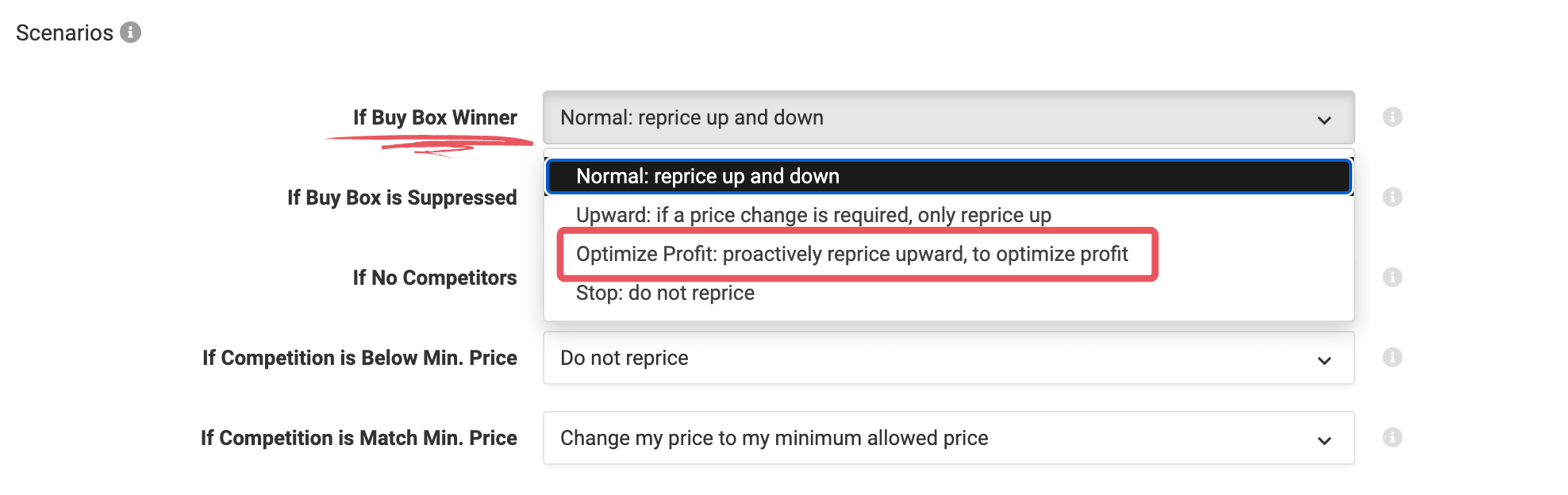
This method could be an effective way to boost profits. Once again, the repricing software takes care of the whole process for you once you have set it up.
Choose the Best Repricer for Your Business
You could completely change how you run your Amazon business when you use a repricer.
There’s no need to spend hours each week monitoring prices and repricing your product listings yourself – now you can use an AI repricing tool that does all the hard work for you.
But how should you choose the best repricer for your Amazon business? There are multiple factors to consider.
Speed of Repricing
One of the most important factors of all is the speed that the repricer works. Some are faster than others, and Repricer is particularly fast.
It monitors the price of competitor listings, then changes your prices rapidly so you know your products are competitive.
Reports
A more advanced repricer may offer informative, helpful reports covering data like price changes within a certain time period. You could use these more advanced reports to improve your pricing strategy.
Rules
More advanced repricers also allow you to set specific rules to give you more control over your repricing. For example, you could target competitors based on factors like feedback.
Price
Some repricing tools are more expensive than others, but always consider the benefits the tool provides. A more advanced tool could help you make more sales and increase your profits, making up for the extra cost.
Try Amazon Repricing Today
Repricing should be considered an essential strategy for any Amazon business owner. If you want to win the Buy Box, make more sales, and boost profits, repricing can help you meet your targets.
This guide contains seven of the most important benefits of not only having a repricing strategy, but of using an automated repricing tool.
Tools like Repricer can have a huge impact on how you run your business, and they do all the hard work for you so you can focus on other areas of your business.
If you haven’t tried out a repricing tool yet, give it a go.
Try Repricer out for free for 14 days to get the hang of it, and see what a difference it can make to your Amazon business.