Amazon Dropshipping: The Ultimate Guide for 2026
In 2025, eCommerce sales are forecast to reach $6.42 trillion globally, representing about 20.5% of total retail sales worldwide. With this tremendous growth, online marketplaces such as Amazon present fertile ground for entrepreneurs and retailers looking to expand their businesses. For those eager to tap into this booming market, Amazon dropshipping offers one of the quickest and easiest entry points.
Why choose Amazon? Because Amazon accounts for approximately 37.6% of all US eCommerce sales and maintains a dominant position globally. With over two-thirds of US households subscribing to Amazon Prime, listing products on this platform gives you access to an enormous potential customer base.
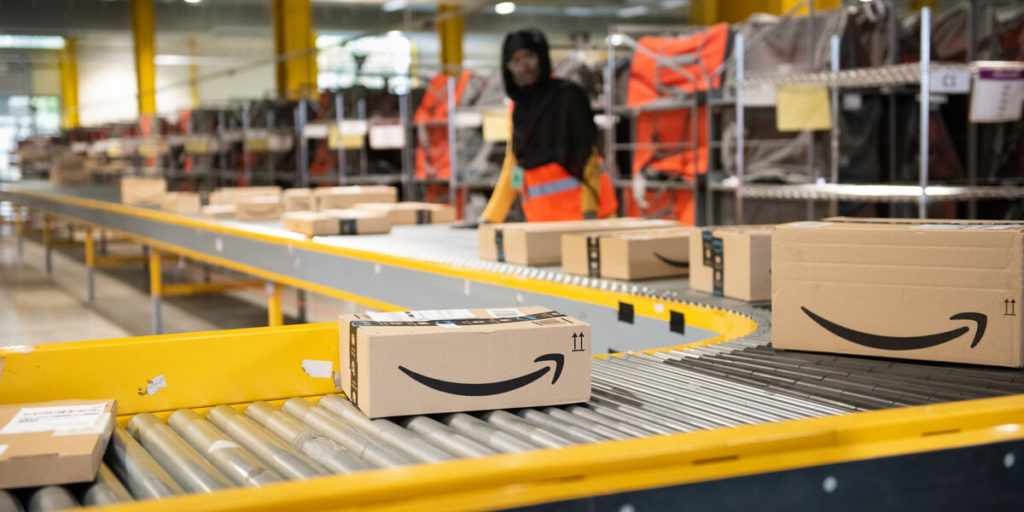
Amazon dropshipping is becoming increasingly competitive, but with proper preparation and strategic execution you can start generating sales in just a couple of weeks.
What does dropshipping mean?
Dropshipping is an eCommerce fulfillment method where merchants sell products without handling the inventory themselves. Instead, when a customer places an order, the product is shipped directly from the manufacturer or wholesaler to the customer.
This business model allows dropshipping businesses to focus on marketing, administration, and customer service rather than complex logistics. If you can master these three skills, you’re well-positioned to make money from dropshipping.
Besides requiring fewer specialized skills, dropshipping also comes with less risk and lower start-up investment than a traditional retail business. Sellers don’t have to invest in inventory before they can start making sales.
Dropshipping in numbers: How big is it?
Around 23% of online sales are fulfilled with dropshipping, according to market research. This accounts for about $365.67 billion of global sales as of 2024, with projections rising to $464.44 billion in 2025.
Studies suggest that manufacturers who use the dropshipping method are 18% more profitable than those who continue to rely on traditional retail models.

With the dropshipping market expected to grow at a compound annual growth rate (CAGR) of 22.0% from 2025 to 2030, reaching over $1.25 trillion by 2030, more manufacturers and merchants are increasingly turning to this business model. For sellers just getting started, this means it’s likely to become easier to source quality dropshipping suppliers in the coming years.
hbspt.forms.create({ region: “na1”, portalId: “4770908”, formId: “e1c98ecc-632c-4d86-b49a-4322cacec16e” });
What about Amazon dropshipping?
Amazon is a well-favored platform for dropshippers. Currently, a significant portion of items purchased on Amazon are sold by third-party sellers, and many of these use dropshipping to fulfill their orders.
Since Amazon accounts for over 37% of all US eCommerce sales, it’s a massive market, and dropshipping can be a great way to secure your share of it!
How do I start Amazon dropshipping
Once you choose some dropshipping products and connect with a supplier through websites like Alibaba or AliExpress, you can begin listing products on Amazon.
Setting up an account is straightforward. However, if you plan to sell products like clothes, jewelry, or beauty items, you’ll need to await Amazon’s approval.
So, how do I start Amazon dropshipping? It’s relatively simple. Create listings and sell products on the platform as you normally would. If the product you want to sell is already listed on Amazon, you can click “Sell yours here.” Then all you have to do is set the price, complete the shipping details, and you’re ready to go.
Since you’ll be selling generic products that other merchants may also offer, winning the Amazon Buy Box is crucial. To give your products the best chances of getting in the Buy Box at the best price possible, you’ll need to use Amazon repricing software.
If your product is new to Amazon, you’ll need to create a product details page from scratch. The most challenging part of this process is getting the images right, as Amazon has specific requirements.
Requirements for Amazon dropshipping
Amazon allows dropshipping, provided sellers meet the requirements outlined in its dropshipping policy. Breaking this policy can result in your selling privileges being revoked. These state that:
Your details must be on all packaging, slips, invoices and information shipped
Any information identifying a third-party dropshipper must be removed before shipping
You must accept and process customer returns yourself
You can’t use other online retailers to fulfill your orders
Seller agreements and policies still need to be complied with
Once you make a sale, you pay your supplier the wholesale cost of the product, along with any shipping or handling fees they charge. Then you keep the profit.
The supplier takes care of everything else, allowing you to focus on making more sales.

Dropshipping on Amazon with FBA
There is another approach to dropshipping on Amazon. Using its FBA service – ‘Fulfilled by Amazon’ – you can deliver orders to your customers without having to handle picking, packing, or shipping them yourself. Amazon will also manage customer service and returns for you.
To make the process even simpler, there’s Amazon dropshipping software available with specific FBA management tools.
To become an FBA merchant on Amazon, you need to ship stock in bulk to one of Amazon’s fulfillment centers. Unlike other forms of dropshipping, this means you have to invest in merchandise and pay for it up-front.
Dropshipping with FBA on Amazon does have several benefits:
FBA fulfillment brings trust and high performance to your brand as Amazon rarely messes up orders
Your products have a better chance of winning the Buy Box
You don’t have to worry about customer service
Your products will qualify for Amazon Prime’s 2-day shipping
With the exception of those selling alcohol or tires, FBA is open to all merchants on Amazon. It’s straightforward to start dropshipping using FBA on Amazon; all you have to do is create a new FBA seller account or upgrade your existing Seller Central Account.
If you’re wondering whether or not this is for you, Amazon offers an online FBA calculator which will help you estimate how much you could earn by moving to its FBA service.
Using Amazon’s fulfillment service (FBA) has plenty of benefits for your dropshipping business.
The disadvantages of Amazon Dropshipping using FBA
Dropshipping using FBA on Amazon comes with some downsides too. You have to pay fulfillment charges and monthly storage fees.
Amazon has very strict and specific packaging rules for any inventory sent to its warehouses. However, if you dropship with a third-party supplier, there is no guarantee they will fulfill Amazon’s packaging requirements either. Any mistakes could lead to your seller account being suspended.
Amazon dropshipping vs other platforms
With over 300 million active users and billions spent every day, there is no doubt that Amazon is a global eCommerce giant. But it isn’t the only platform you can use to build a successful dropshipping business. In fact, it’s often best to utilize a selection of different channels.
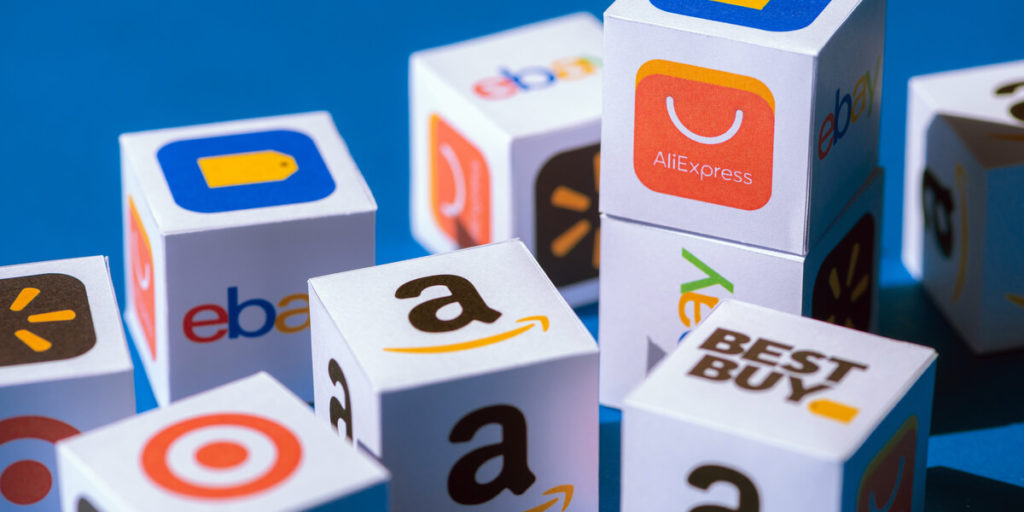
Dropshipping: eBay vs Amazon
Though not as large as Amazon, eBay has a significant pool of customers and allows dropshipping. However, it also charges a listing fee for each product you post.
On Amazon, you can list as many products as you want and then remove any that don’t sell without incurring additional costs. On eBay, this approach would be expensive. Therefore, testing products is better done on Amazon. But you can add your proven top-sellers to eBay to maximize profits.
Setting up your own platform
While launching your own store requires more work, it’s free from third-party fees and strict requirements. It also offers full control of your brand, website, and inventory. Plus, if you use Shopify, you can directly link it with your Amazon account.
Amazon dropshipping is a great starting point, but each platform has its own advantages. Consider using Amazon alongside other marketplaces and platforms to fully capitalize on the growing eCommerce industry.
As the global dropshipping market continues its impressive expansion, expected to reach $464.44 billion in 2025 and over $1.25 trillion by 2030, there has never been a better time to explore this business model. And with Amazon’s massive share of online retail, strategic dropshipping on this platform offers tremendous potential for entrepreneurs in 2025 and beyond.
Remember, the key to successful Amazon dropshipping lies in understanding and following Amazon’s policies, carefully selecting suppliers, and providing excellent customer service. With these elements in place, you can build a thriving dropshipping business in the increasingly digital marketplace of 2025.
For more information on finding reliable dropshipping suppliers in the USA or to understand the impact of global events like the coronavirus on dropshipping, check out our other guides.